Ownership Rights: Latest Forms and Grounds for Vesting Under Vietnamese Law
Ownership rights are among the fundamental rights of individuals, explicitly protected and defined under the 2015 Vietnamese Civil Code. A proper understanding of property rights helps owners protect their assets and exercise their lawful interests in…
 Hệ thống
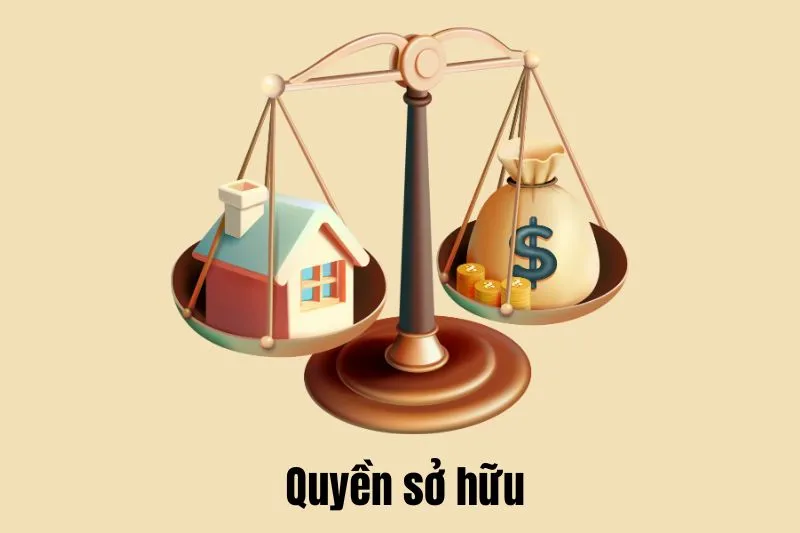
Ownership rights are among the fundamental rights of individuals, explicitly protected and defined under the 2015 Vietnamese Civil Code. A proper understanding of property rights helps owners protect their assets and exercise their lawful interests in accordance with the law. In this article, Inter Justice Law Firm explores in detail the forms, legal grounds for establishment, and termination of these rights under current Vietnamese regulations.
According to Article 158 of the Civil Code 2015 of Vietnam, ownership rights refer to the legal entitlements of an owner over property, comprising three core rights: the right of possession, the right of use, and the right of disposition. These are legal entitlements that allow owners to manage, use, and make decisions regarding their assets in compliance with the law.
The time of ownership establishment is stipulated in Article 161 of the Civil Code 2015 of Vietnam. Ownership rights may be established either by law or based on agreements between parties. In the absence of such agreement, the property rights are typically recognized at the time the property is transferred to the new owner.
Along with rights, ownership also entails legal responsibilities, including the obligation of the owner to bear risks associated with the property, unless otherwise agreed or provided by law.

Forms of Ownership Rights Under the Civil Code 2015 of Vietnam
Ownership Rights are categorized into three primary forms: state ownership (public ownership rights), private ownership rights, and common ownership rights, each with distinct characteristics as follows:
State Ownership (Public Ownership Rights)
State ownership (public ownership rights) is a form where assets are under the common ownership of the entire people, with the State acting as the representative owner and exercising unified management.
-
Assets under state ownership include: land, natural resources (such as water, minerals, airspace, and sea areas), and assets invested or managed by the State.
-
The State exercises ownership rights through the Government, state agencies, or other authorized organizations, ensuring lawful, efficient, and purpose-driven use.
-
Assets not yet assigned to individuals or legal entities will be protected, investigated, planned, and exploited by the Government.
Private Ownership
Private ownership rights are a form where assets belong to a specific individual or legal entity, characterized by:
-
There is no legal restriction on the quantity or value of privately owned property, as long as it is acquired lawfully.
-
The owner has full rights to possess, use, and dispose of the property for purposes such as consumption, production, or business, provided it complies with the law.
-
Private ownership rights must ensure that they do not cause harm or negatively impact national, ethnic, or public interests, as well as the legitimate rights and interests of others.
Common Ownership
Common ownership rights are a form of ownership where multiple subjects hold rights to the same property, with two main types: Common ownership by shares and Undivided (joint) common ownership.
-
Common ownership by shares: Each owner’s share is clearly defined. Each owner has rights and obligations corresponding to their respective share of ownership, unless otherwise agreed.
-
Undivided (joint) common ownership: The ownership share of each party is not specified. All owners share equal rights and obligations over the property.
- Some special types of common ownership include: joint ownership between spouses, within families, among communities, and mixed forms of ownership.
Comparison Between Forms of Ownership Rights
- Subject of Ownership: State property rights are represented by the State, private ownership rights belong to individuals or legal entities, while common ownership rights involve multiple subjects.
- Scope of Use: State property rights emphasize public benefit, private ownership rights prioritize individual needs, and common ownership rights serve the shared interests of the co-owners.
- Management Method: State property rights are strictly managed by the State, private ownership rights allow for freedom within the legal framework, while common ownership rights require cooperation among the co-owners.
These three forms coexist, complement each other, and harmonize the interests of the community and individuals, establishing a legal foundation for the management and use of property in Vietnam.
Legal Grounds for the Establishment and Termination of Ownership Rights Under the Law in Vietnam
Ownership rights are established based on specific legal grounds to ensure lawful possession and protection of property. According to Article 161 of the Civil Code 2015 of Vietnam, property rights can be vested through forms of assignment (transfer), inheritance, donation (gift), or other legal contracts. Notably, in the absence of a specific agreement, the time of vesting of property rights is generally determined when the property is transferred to the acquiring party, and these rights may be subject to certain legal conditions, such as contracts related to sale, inheritance, or donation of property.
Legal Grounds for Establishing Ownership Rights
Property rights can be vested through the following forms:
-
Lawful transactions: Agreements between parties can create property rights, such as contracts of sale, contracts of donation, or inheritance agreements. This is a primary method for vesting property rights, particularly in civil transactions.
-
Inheritance: According to Article 650 of the Civil Code 2015 of Vietnam, when a person passes away, their assets may be transferred to heirs. In this case, ownership rights are established at the time of the opening of the inheritance.
-
Transfer of property: property rights can be transferred through property transfer agreements or through decisions of competent state agencies issuing certificates of property ownership (e.g., land use rights certificates, ownership of properties attached to land).
-
Gifts and donations: Ownership can be vested when property is donated from the owner to another party, carried out through lawful transactions based on agreements between the parties.

Legal Grounds for Terminating Ownership Rights
Property rights are not perpetual and can be terminated in several circumstances:
-
Loss or destruction of the property: Ownership ends when the property is damaged, lost, or completely destroyed and cannot be restored.
-
Transfer of ownership: Ownership Rights can be terminated when an owner transfers their property to another party via a lawful contract, and ownership rights terminate at the time of transfer.
-
Recovery of property by decision of a state agency: In certain cases, the State has the right to recover property owned by individuals or legal entities, such as in cases of land recovery or property acquired through legal violations.
-
Confiscation of property: Property may be seized or forfeited by a court ruling or competent authority when the owner breaches the law.
-
Absolute transfer of ownership in a contract or agreement: In some situations, agreements between parties may set conditions or limitations on property rights, leading to the termination or alteration of property rights.
The establishment and termination of ownership rights are clearly regulated in the Civil Code 2015 of Vietnam, ensuring legality and transparency in property management. Owners need to thoroughly understand these grounds to protect their legitimate rights and comply with legal regulations in Vietnam.
Latest articles
 What is Business Bankruptcy? Signs of Business BankruptcyHệ thống
 Latest Update on Types of Commercial Contracts Under Vietnamese LawHệ thống
 Transfer of Intellectual Property Rights: Latest Conditions and Key ConsiderationsHệ thống
 Distinguishing Copyright and Intellectual Property RightsHệ thống
 Methods of Protecting Intellectual Property RightsHệ thống
 Overview of International Commercial Arbitration in 2024Hệ thống
Article categories
Our services
 Lawyers representing interests in commercial arbitrationCommercial arbitration is a method of dispute resolution through the actions of…
 Copyright Protection of WorksArticle 225, paragraph 2 of the 2015 Vietnamese Penal Code, as amended in 2017,…
 Patent ProtectionĐiều 11, khoản 1 và khoản 12 của Nghị định 99/2013/NĐ-CP quy định phạt tiền từ 10.000.000…
 Industrial Design ProtectionNghị định mới của Chính phủ bổ sung mức phạt tiền từ 20.000.000 đồng - 30.000.000 đồng…
 Exclusive Trademark ProtectionĐiều 226 của Bộ luật Hình sự 2015 (sửa đổi, bổ sung năm 2017) quy định về hành vi xâm…
 Intellectual Property ProtectionProtecting intellectual property rights is a proper way to honor creative endeavors and…
 Support for dispute mediation and negotiationMediation and conflict resolution services are a process aimed at resolving disputes…
 Lawyers who protect your rights in courtDefendant defense in court disputes involves providing legal services to protect the…