What is Copyright? What Constitutes Copyright Infringement? Examples of Copyright Infringement
Today, the issue of copyright infringement has become very prevalent and attracts significant public attention. Copyright infringement not only yields illegal benefits but also negatively impacts the ownership rights of the original creators. In this article,…
 Hệ thống
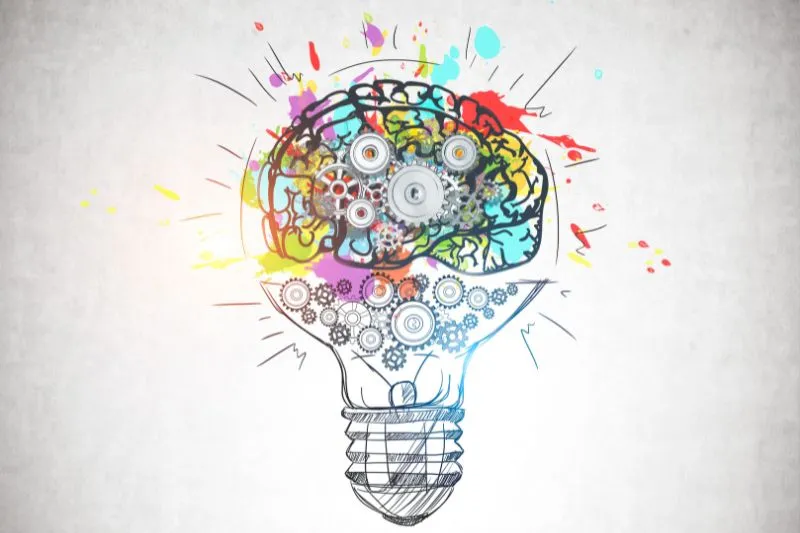
Today, the issue of copyright infringement has become very prevalent and attracts significant public attention. Copyright infringement not only yields illegal benefits but also negatively impacts the ownership rights of the original creators. In this article, INTER JUSTICE will clearly explain the concept of copyright and how to identify and handle acts of infringement. Let’s explore!
1. What is Copyright?
Current law does not provide a specific definition of “What is Copyright?”. However, you can understand copyright as the legal right of an author or owner over their work, including the rights to use, copy, distribute, and display the work. Copyright protects works such as books, music, films, software, and art. It prohibits others from using the work without the permission of the copyright holder. Copyright usually has a specific term, after which the work becomes public domain.
Purpose of Copyright Protection
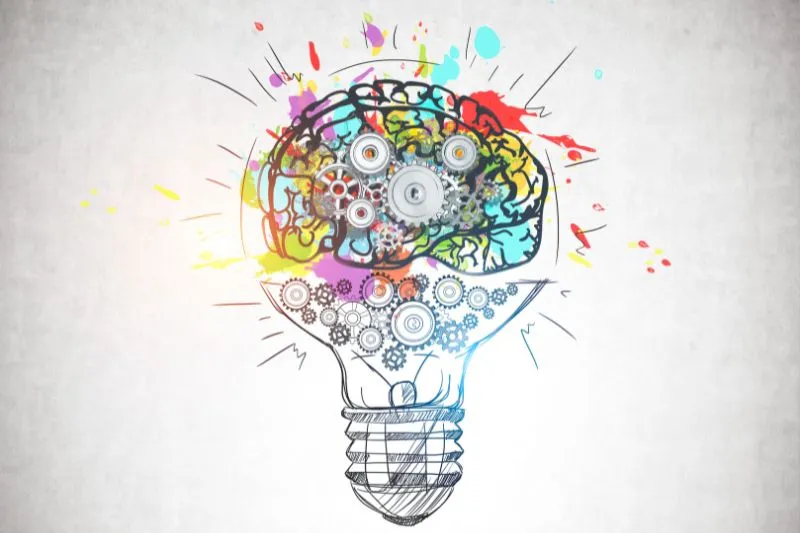
The purpose of copyright protection is as follows:
- To promote creativity and the development of science, culture, and art. Copyright protection acts as a reward and recognition for authors, encouraging them to continue making creative contributions to the social community.
- To ensure the rights of authors over their works, including: Economic rights (allowing authors to have exclusive ownership and commercially exploit their works), moral rights (protecting the personal interests of authors, including the right to be named and the integrity of the work during use and exploitation), and spiritual rights (protecting the non-economic interests of authors).
- Copyright protection allows the legal owner to have the economic right to authorize or prevent the use of their work in commercial activities. They can also receive royalties for the use of their work. Additionally, copyright holders have the right to prohibit or authorize different forms of use of the work, such as publishing, printing, recording, public performance, broadcasting, translation into other languages, adaptation into films, and many other forms.
Some Works Protected by Copyright
Specific works protected by copyright are often not listed exhaustively in legal documents. However, in general, works protected by copyright globally typically include the following categories:
- Literary works: Including novels, poems, plays, reference works, articles, and other types of literary works.
- Computer programs and databases: Copyright protection also applies to software, mobile applications, video games, and databases.
- Film, music, and choreography: Musical works, films, music videos, sound recordings, original recordings, and choreographic works.
- Artistic works: Including paintings, drawings, photographs, and sculptures.
- Architecture: Architectural designs and related works can also be protected by copyright.
- Advertising, maps, and technical drawings: Advertising works, maps, technical drawings, and similar works may also be protected.
It is important to note that copyright protection only applies to the expression of the work, not the ideas, operating methods, or mathematical formulas. Some elements such as titles, slogans, and logos may be protected by copyright if they meet the requirements for authorship.
Significance of Determining Copyright
Determining the copyright of a work is crucial because it brings the following benefits:
- Protection of the work: Copyright is used to protect music, films, novels, poems, architecture, and other artistic works of cultural value. This helps ensure that the work is not illegally copied or used, protecting the rights of the owner and the author.
- Protection of the author’s rights: Copyright helps protect the rights and interests of the author in relation to their work. The work can have spiritual value and can also bring financial benefits to the author. Copyright ensures that the author has control over the use and exploitation of their work, while also encouraging the author to continue creating.
- Legal right: Copyright is a legal right granted to the creator of an original work, to protect that work and provide specific author’s rights such as copying, distributing, publicly displaying, and creating derivative works based on the original work.
- Term of protection: The duration of copyright depends on many factors, including when the original work was created and local legal regulations. Typically, copyright lasts for a certain period, after which the work falls into the public domain.
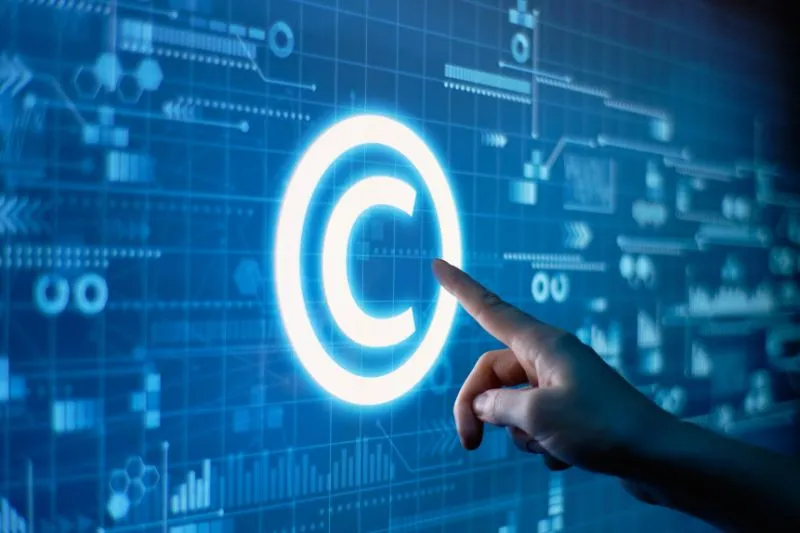
In summary, determining the copyright of a work not only protects the work and the author’s rights but also plays an important role in promoting creativity and protecting intellectual property.
Some Notable Characteristics and Signs of Copyright
The characteristics and signs of copyright include:
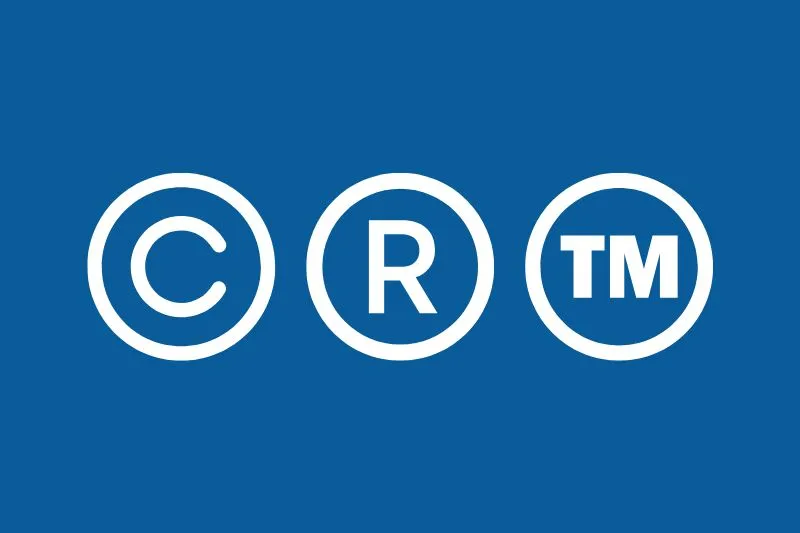
- The symbol ® (R in a circle): R stands for “Registered,” indicating that the work has been registered and is protected. When a trademark contains the ® symbol, it shows that the company has registered and officially owns the trademark according to government regulations, which is a legal and accepted action.
- The symbol © (C in a circle): © is the symbol for “Copyrighted,” indicating ownership and the right to use a specific work, service, or idea. Using a product, service, or idea without the owner’s consent is copyright infringement. Copyright applies wherever creativity, authorship, or the creator of the work or idea appears. Literary, artistic, architectural, and application works are protected by copyright.
- The symbol ™ (TM): ™ is the abbreviation for “Trademark,” distinguishing a product, service, or company from others. When a trademark has not been registered or is not protected, the owner can use this symbol as a trademark to assert ownership and warn others against infringement.
Vietnam has acceded to many international treaties and conventions for the protection of copyright, such as the Berne Convention, TRIPS, and WIPO, and has also enacted laws on intellectual property and publishing to comply with international regulations and laws. The granting and transfer of copyright are prerequisites for the legal use of works under Vietnamese and international law. Infringing the copyright of another person’s work will be considered a violation of the law.
Are Copyright and Author’s Rights the Same?
Copyright and author’s rights are related but not entirely identical concepts. Here’s a simplified understanding of the two:
- Copyright: Copyright focuses on the commercial value aspect of intellectual property rights. It protects the owner’s rights to use, copy, distribute, or commercialize their work, product, or service. Copyright plays an important role in ensuring fairness and encouraging creativity in the business environment.
- Author’s Rights: Author’s rights focus on protecting the author’s rights over their work. It relates to moral values, personal rights, and the connection between the author and the work. Author’s rights ensure the full protection of the author’s rights, including the right to be credited, control the use of the work, and receive compensation when the work is used.
However, in practice in Vietnam, the term “author’s rights” is often used to refer to both concepts. Although both relate to protecting the rights of the author or owner over their work, in official Vietnamese legal documents such as the Civil Code and the Penal Code, the term “author’s rights” is the officially used term.
2. What is Copyright Infringement?
What is copyright infringement? It is the act of using a work that has been copyrighted and is protected by copyright law without permission. Acts of copyright infringement include copying, distributing, displaying, or performing the protected work without authorization from the copyright holder.
Copyright Holder: is usually the creator of the work or the enterprise or producer to whom the copyright has been assigned. Copyright holders often apply legal and technological measures to prevent and punish copyright infringement.
To determine copyright infringement, the following conditions must be met:
- The object under consideration falls within the scope of works protected by copyright.
- The object under consideration contains infringing elements.
- The person committing the act under consideration is not the author or copyright holder.
- The infringing act occurs in a country with copyright protection laws. If the act occurs on the Internet but targets consumers or users in that country, it is also considered to have occurred in that country.
Works protected by copyright may include literary and scientific works, textbooks, lectures, journalistic works, musical works, theatrical works, cinematographic works, fine art works, photographic works, architectural works, sketches, diagrams, maps, drawings, computer programs, and data collections.
Determining whether a work infringes copyright requires considering factors such as the scope of protection, comparison with the original work, and the release date.
Examples of Forms of Copyright Infringement
Here are some examples of forms of copyright infringement:
- Verbatim copying: Copying part or all of a previously created work without the permission of the owner or author. This can include copying an article, a piece of music, a film, or an artwork without consent or a license.
- Unauthorized distribution: Circulating part or all of a work without ownership or copyright. For example, sharing a movie online without the permission of the producer or distributor.
- Imitating ideas and structure: Creating a work that does not verbatim copy but copies the entire idea, structure, and approach to the issue from another work. This is a more difficult form of infringement to detect but can still be considered copyright infringement if there is evidence that the new work imitates an original work.
- Translating creative ideas: Translating creative ideas from one language or form to another. For example, translating a book from English to another language without the author’s permission.
Note: A creative work synthesized from many different sources with clear information about the origin and main author will not be considered copyright infringement. However, determining whether a work infringes copyright is a complex process that sometimes requires court intervention.
Examples of Patent Infringement
Here are some examples of patent infringement:
- Reusing a published idea: Using a published and patented idea while the patent is still legally valid. However, it should be noted that a patent in one country cannot be used to prove copyright infringement in another country unless that patent is internationally recognized.
- Simulating and rewriting: Simulating or rewriting a patent in another language, describing a recognized and still valid creative idea, can be considered copyright infringement. For example, copying software by using a programming language different from the original language of the patent can be considered copyright infringement if the rewriter simulates the patented idea.
Note: There are many cases where two inventions may be similar and not be considered copyright infringement. To prove that two inventions are independent, detailed information such as the date, month, witnesses, and other details about the origin, motivation, or structure of the invention are often used. The term of patent copyright is regulated by each country, and international patents usually have a maximum term of 20 years. During this validity period, creative ideas are considered common knowledge of humanity, and everyone can use them without the author’s permission.
In addition, here are some common forms of copyright infringement today:
- Copying and imitating famous brands or organizational logos.
- Plagiarizing melodies or stealing ideas from musical works.
- Using other people’s images for personal purposes without consent or without citing the source and the main author’s name.
Note: These are just some common examples; copyright infringement can take many different forms and situations.
How is Copyright Infringement Punished?
The handling of copyright infringement depends on the laws of each country. Here is an example of how copyright infringement is handled in Vietnam:
Administrative Sanctions: Copyright infringers may be subject to administrative penalties according to the law. For example, in Vietnam, monetary penalties may be applied as follows:
- Unauthorized modification or cropping of a work that harms the honor and reputation of the author: A fine ranging from 3 million VND to 5 million VND.
- Distorting a work that harms the honor and reputation of the author: A fine ranging from 5 million VND to 10 million VND.
- Copying a work without the permission of the owner: A fine ranging from 15 million VND to 35 million VND.
Remedial Measures: In addition to administrative penalties, copyright infringers must also implement remedial measures in accordance with the law. For example, in Vietnam, the following remedial measures may be applied:
- Public correction on mass media: The infringer must publicly provide accurate information about the copyright infringement on mass media.
- Removal of infringing copies: The infringer must remove infringing copies from the online and digital environment or destroy the material evidence related to the copyright infringement.
Note that remedial measures and penalties may vary depending on the laws of each country.
Hopefully, through this article, INTER JUSTICE has provided you with an overview of what copyright is and the basic issues related to copyright and intellectual property infringement. The article also explains what copyrighted software is and why we should use copyrighted software instead of cracked software. We hope this information will help readers better understand the importance of copyright in the modern context.
Latest articles
 What is Business Bankruptcy? Signs of Business BankruptcyHệ thống
 Latest Update on Types of Commercial Contracts Under Vietnamese LawHệ thống
 Transfer of Intellectual Property Rights: Latest Conditions and Key ConsiderationsHệ thống
 Distinguishing Copyright and Intellectual Property RightsHệ thống
 Methods of Protecting Intellectual Property RightsHệ thống
 Overview of International Commercial Arbitration in 2024Hệ thống
Article categories
Our services
 Lawyers representing interests in commercial arbitrationCommercial arbitration is a method of dispute resolution through the actions of…
 Copyright Protection of WorksArticle 225, paragraph 2 of the 2015 Vietnamese Penal Code, as amended in 2017,…
 Patent ProtectionĐiều 11, khoản 1 và khoản 12 của Nghị định 99/2013/NĐ-CP quy định phạt tiền từ 10.000.000…
 Industrial Design ProtectionNghị định mới của Chính phủ bổ sung mức phạt tiền từ 20.000.000 đồng - 30.000.000 đồng…
 Exclusive Trademark ProtectionĐiều 226 của Bộ luật Hình sự 2015 (sửa đổi, bổ sung năm 2017) quy định về hành vi xâm…
 Intellectual Property ProtectionProtecting intellectual property rights is a proper way to honor creative endeavors and…
 Support for dispute mediation and negotiationMediation and conflict resolution services are a process aimed at resolving disputes…
 Lawyers who protect your rights in courtDefendant defense in court disputes involves providing legal services to protect the…